Soap Dispenser Problems: Clogs, Leaks, Drips, Fixes
What are common problems with soap dispensers?
Soap dispensers seem simple, but a few predictable issues can make them messy, wasteful, or annoying to use. Most problems come down to clogs, air getting trapped in the pump, poor sealing, or the soap itself being too thick for the mechanism.
1) Pump won’t dispense (or dispenses inconsistently)
A pump that suddenly stops working is often dealing with a clogged nozzle, a blocked pump tube, or air in the line. Thick hand soap, lotion-like soap, and soap that has partially dried inside the spout can restrict flow. If the dispenser was recently refilled, the pump may also need a few presses to prime and pull soap up the tube.
2) Dripping and messy residue around the spout
Drips usually happen when the pump doesn’t fully seal after pressing, leaving a small amount of soap to slowly slide down the nozzle. Over time, that soap dries and creates sticky buildup. Some formulas also “string” as they separate from the spout, which makes the mess worse. Regular wiping and avoiding overfilling can help reduce residue.
3) Leaks at the base or around the collar
Leaks commonly come from cross-threading the pump when reattaching it, a worn or missing gasket, or hairline cracks in the container. Even a tiny gap can let soap seep out when the bottle is squeezed or tipped. If you notice soap pooling under the dispenser, check that the pump is seated straight and tightened evenly.
4) Corrosion, peeling, or discoloration on the finish
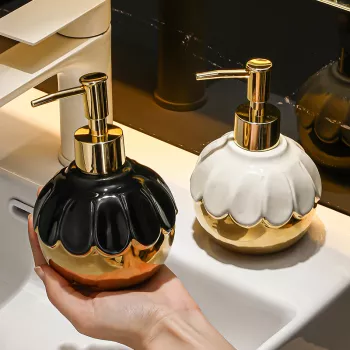
In humid bathrooms, water and cleaner overspray can wear down coatings, especially if harsh chemicals are used. A quality finish holds up better, but it still benefits from gentle cleaning and drying. If you’re comparing materials and finishes, the guide on the Hydrangea ceramic soap dispenser with an electroplated finish is a helpful reference point for what to look for in durability and upkeep.
5) Soap compatibility issues (too thick, too thin, or separating)
Very thick soap can cause slow dispensing or pump strain, while watery soap can drip, splatter, or leak more easily. Some soaps separate over time, especially if diluted; that can lead to inconsistent pumps (mostly liquid first, then thicker soap later).
FAQ
How do you unclog a soap dispenser pump?
Rinse the pump and nozzle under warm water, then pump warm water through until it runs clear. If buildup is stubborn, soak the pump head in warm water for 10–15 minutes and try again.









Leave a comment