Cast-On Stitches for a Baby Blanket (Easy Formula)
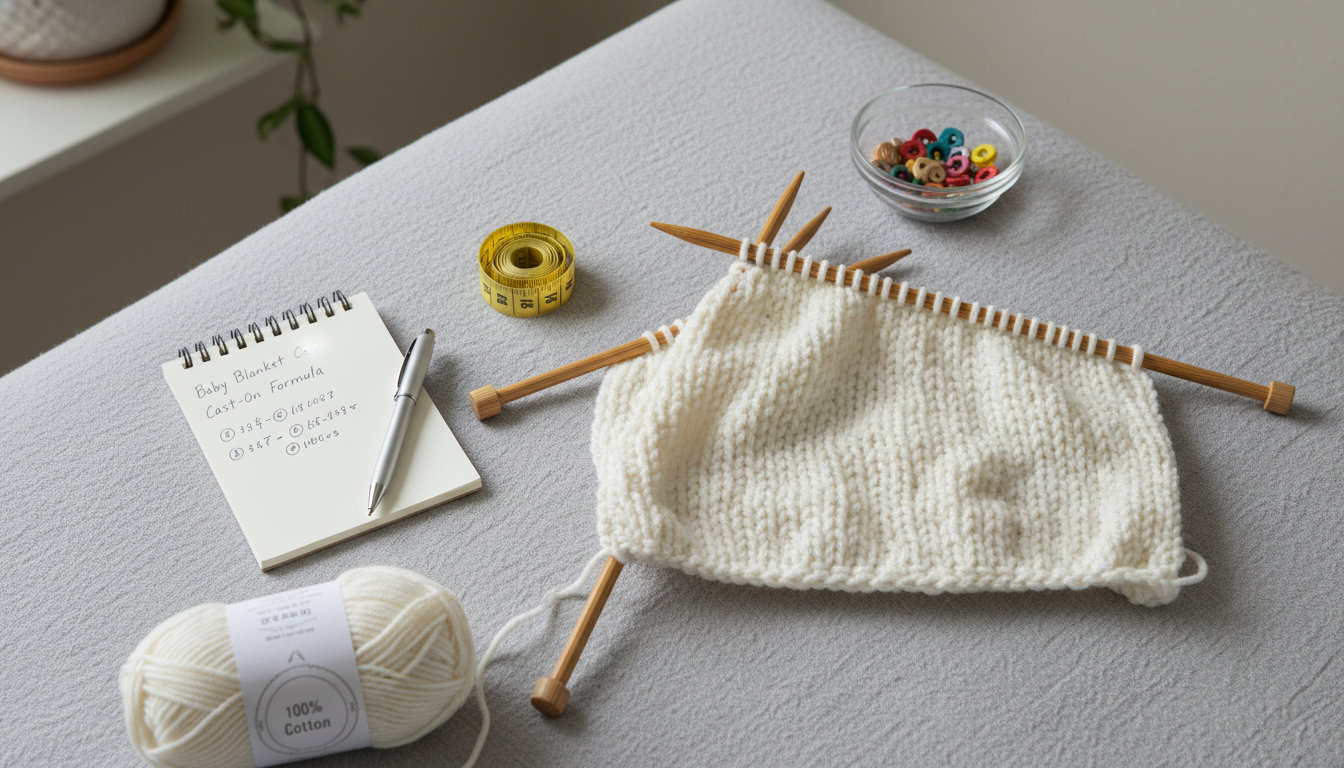
How many stitches do you cast on for a baby blanket?
The number of stitches to cast on for a baby blanket depends on three things: your finished blanket width, your yarn weight, and your stitch gauge (stitches per inch). There isn’t one universal cast-on number that works for every yarn and needle size, but there is a reliable way to get the right count for your specific materials.
Use this simple cast-on formula
Cast-on stitches = (desired width in inches) × (stitches per inch)
For example, if your gauge is 4.5 stitches per inch and you want a 30-inch-wide blanket: 30 × 4.5 = 135 stitches (round to a number that suits your pattern repeat).
Typical cast-on ranges (by yarn weight)
These ranges assume a common baby-blanket width of about 28–32 inches and average gauges for each yarn class. Your swatch may vary, so treat these as starting points:
Bulky (#5): about 60–90 stitches
Worsted/Aran (#4): about 110–160 stitches
DK (#3): about 130–190 stitches
Sport/Fingering (#2/#1): about 180–260+ stitches
Don’t skip the gauge swatch
A quick swatch prevents a blanket that turns out too narrow or unexpectedly wide. Knit a 4×4-inch swatch in your chosen stitch pattern, measure the stitches across 4 inches, then divide by 4 to get stitches per inch. If you’re using a pattern with a repeat (like ribbing, seed stitch, or a simple motif), round your cast-on to the nearest repeat-friendly number.
Want a soft, everyday pattern to follow?
For a cozy, beginner-friendly approach and a complete walkthrough, see the full guide here: Super Soft Knit Baby Blanket Guide.
For Cast-On Stitches for a Baby Blanket (Easy Formula), the best answer depends on fit, material, care instructions, and how the product will be used day to day.
FAQ
What is a good size for a knitted baby blanket?
A versatile everyday size is around 28×32 inches to 30×36 inches. Smaller sizes work well for strollers, while larger ones are better for crib use (always follow safe sleep guidelines for age).









Leave a comment