Simple Home Systems: Checklists for Less Stress
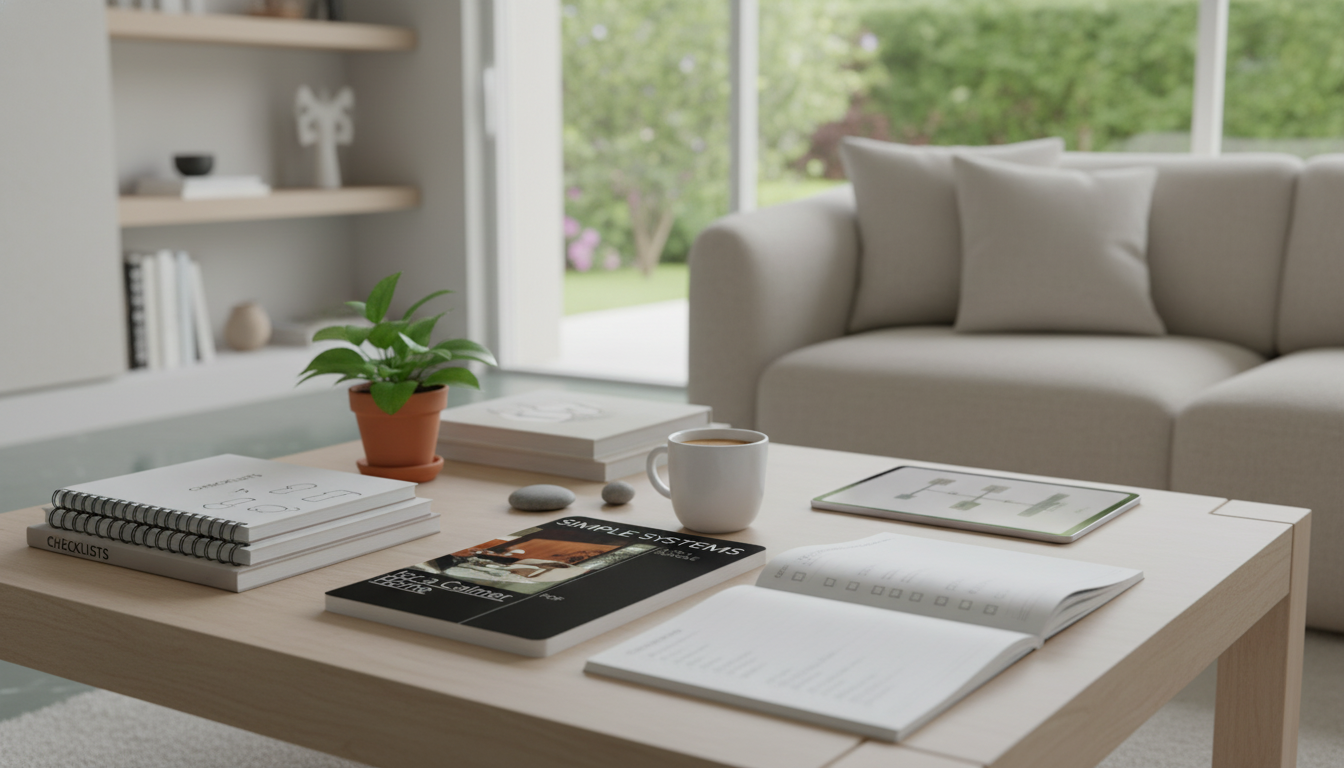
Simple Systems for a Calmer Home: Guides, eBooks & Checklists That Make Organizing Easier
A calmer home usually comes from a handful of repeatable routines—not a weekend-long overhaul. Simple systems reduce daily decision fatigue, keep clutter from returning, and make it easier to maintain order with quick checklists and step-by-step guides. When your home runs on a few “default settings,” you spend less time searching, re-cleaning, and renegotiating what “put away” means.
What “simple systems” look like in real life
A system is a repeatable way to handle the same problem (mail, laundry, toys, paperwork) with fewer steps. The best ones are visible and easy to follow: labeled bins, a single drop-zone, one family calendar, one “returns” basket. In other words, you decide once—where things go, when tasks happen, and what “done” looks like—so you don’t have to decide again every day.
Start with the highest-traffic areas: the entryway, kitchen counters, living room surfaces, and bathrooms. Aim for stable baselines you can return to quickly, like clear counters, an empty sink at night, or one load of laundry per day (or a set schedule). Clutter tends to hijack attention; research has found that competing visual input can reduce focus and make it harder to process information efficiently (Princeton Neuroscience Institute).
Common home stress points and the simplest system to fix them
| Stress Point | Simple System | Tools to Use | Time to Set Up |
|---|---|---|---|
| Mail and papers pile up | One inbox + 5-minute daily sort | In-tray, shred bin, folder labeled “Action/To File” | 15–30 minutes |
| Shoes, bags, keys everywhere | Entry drop-zone | Hooks, small tray, shoe rack | 20–45 minutes |
| Kitchen counters never clear | Counter reset routine | Dish bin, wipe cloth, “put away” checklist | 10–20 minutes |
| Laundry overwhelms the week | Laundry loop | 2 hampers (lights/darks), folding station, donation bag | 20–60 minutes |
| Toys migrate room to room | Container limit + nightly sweep | 2–4 bins, labels, timer | 30–60 minutes |
A quick-start reset: stabilize the home in 30–60 minutes
When things feel out of control, a short reset is more effective than a complicated plan. Set a timer for 10 minutes per zone (entry, living room, kitchen, bathroom). The timer prevents perfectionism and turns “I should clean” into “I’m doing the next 10 minutes.”
- Collect “traveling items” into one basket first; don’t put away while collecting.
- Do a fast trash/recycling pass; removing volume is the quickest visible win.
- Return obvious items to their “home” next; if an item has no home, place it in a temporary “decide later” bin.
- End with a two-minute surface wipe in the kitchen and bathroom for a noticeable calm effect.
This kind of reset also supports stress management by creating small, controllable wins—an approach aligned with practical coping tools recommended by public health guidance (CDC: Coping with stress).
Build systems that stick: the three rules
Rule 1: One home per item
Rule 2: Store by frequency
Rule 3: Containers are limits
Room-by-room systems that reduce daily friction
Entryway: stop clutter at the door
Use one hook per person, one tray for small essentials (keys, wallet, access card), and a single “outgoing” bag for returns and donations. If you build a small charging station here, a compact plug keeps devices contained; the 65W GaN USB C Fast Wall Charger with Quick Charge can simplify one-cable, one-spot charging.
Kitchen: keep counters clear with a close-down routine
Living room: contain comfort items, not clutter
Bathroom: two bins + a restock checklist
Keep daily items in one bin and backups in another. Tape a quick restock checklist inside a cabinet door so “running out” doesn’t become an emergency. Small repeatable actions help reduce chronic stress load over time, which matters because prolonged stress can affect the body in multiple ways (American Psychological Association).
Bedroom: a “clothes in motion” system
Decluttering without burnout: a decision-light method
Using guides, eBooks, and checklists to maintain calm
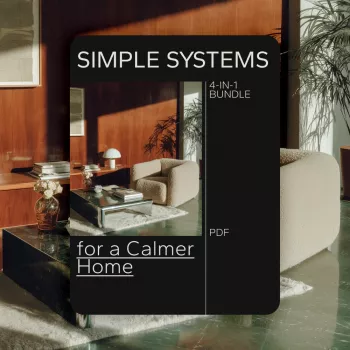
A structured option: Simple Systems for a Calmer Home
For households that want clear steps instead of another vague organizing promise, Simple Systems for a Calmer Home: Organize for Less Stress with Guides, eBooks & Checklists offers a structured toolkit built around practical guides, digital eBooks, and checklists for daily, weekly, and seasonal routines. It’s designed to help create consistent “homes” for items, simplify family routines, and prevent clutter from cycling back.
If time and focus are a challenge, pairing home routines with a planning assistant can help keep your lists and schedules easier to follow. The Personal AI Productivity Companion Toolkit | 10-in-1 AI Virtual Assistant Bundle can support planning and reminders so the “reset” stays small and regular instead of turning into a big catch-up day.
Where this kind of toolkit helps most
| Goal | What to set up first | Checklist focus |
|---|---|---|
| Less morning chaos | Entry drop-zone + launch pad | Daily 5-minute reset |
| Clearer kitchen | Counter reset + container limits | Evening kitchen close-down |
| Laundry under control | Hamper split + folding station | Daily/alternate-day laundry loop |
| Easier cleaning | Supply zones per floor | Weekly home baseline list |
FAQ
What if there isn’t enough storage space for organizing?
Use container limits and store by frequency so your easiest-to-reach spaces hold what you actually use. Reduce duplicates first, then create a few high-impact zones (entry, kitchen, bathroom) before buying more storage.
How long does it take to feel a difference from simple home systems?
A 30–60 minute reset can create an immediate visual difference. Most households notice a real drop in daily stress after 7–14 days of consistent quick resets, with deeper, longer-lasting change after about 4–6 weeks.
What’s the easiest system to start with if motivation is low?
Start with one small win: a mail inbox, an entry tray/hooks, or a nightly five-minute reset using a printed checklist. The goal is fewer steps and steady repetition—not intensity.









Leave a comment