Multi-Level Cat Tree Tower: Hammocks, Condo, Scratch Posts
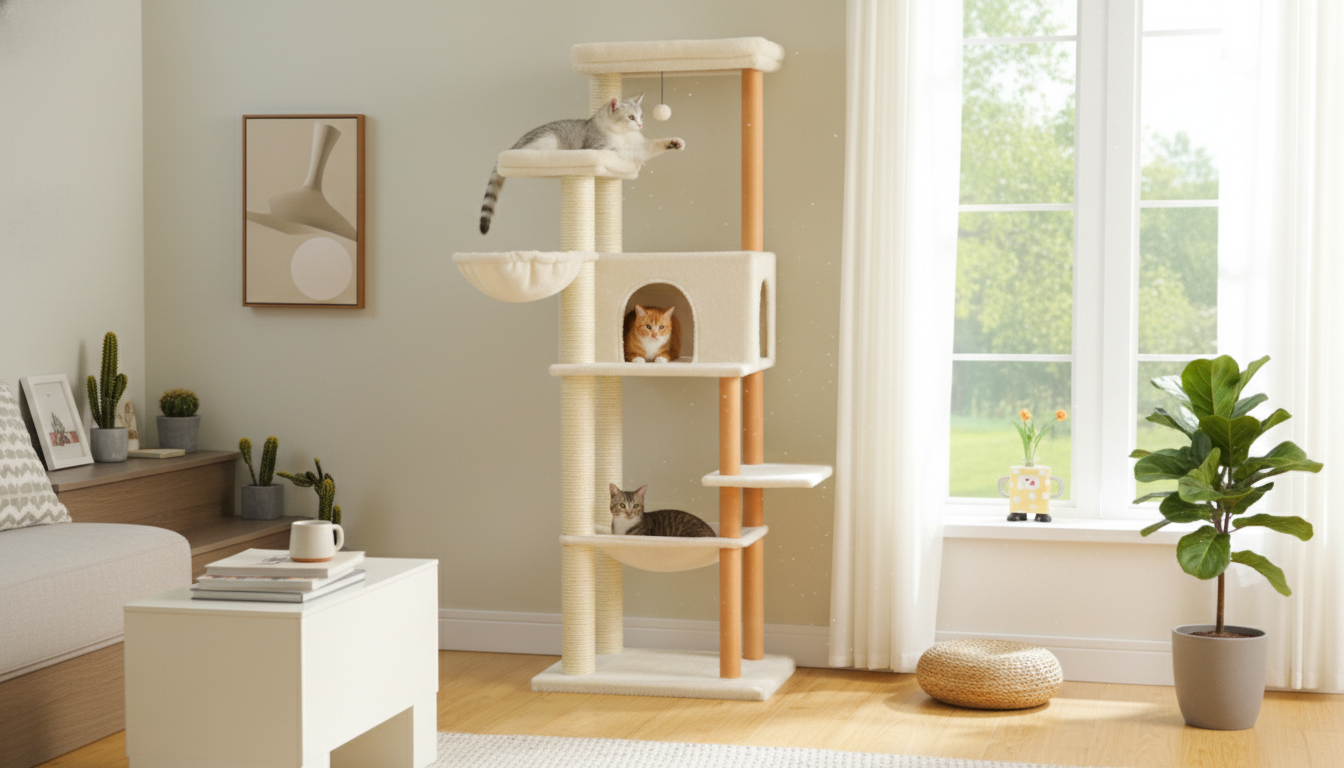
Large Multi-Level Cat Tree Tower with Hammocks, Condo & Scratching Posts: Comfort, Play, and Claw Care in One Space
A sturdy cat tower can turn one small corner into a dedicated zone for lounging, climbing, hiding, and scratching. A multi-level setup with hammocks, a condo, and multiple scratching posts helps meet everyday needs while keeping the rest of the home calmer (and often, the couch a little safer). Below is a practical guide to choosing the right tower, placing it where cats actually use it, and keeping it stable and clean for the long haul.
What a Multi-Level Tower Adds to Daily Cat Life
Cats are naturally drawn to height, edges, and “safe” observation points. A vertical tower creates usable territory without eating up floor space—especially valuable in apartments or multi-cat homes where sharing matters. Multiple levels also make it easier for cats to separate activities: one spot for watching, another for napping, another for play chases that end with a satisfying scratch.
Hammocks are a unique bonus because they cradle the body and flex slightly, which many cats prefer for longer, deeper naps. A covered condo adds an enclosed, low-stimulation retreat—helpful for shy cats, new arrivals, or any cat that needs a midday break away from noise. And when scratching posts are built into the route cats already take (up and down the tower), the scratch option becomes more convenient than furniture.
Key Features to Check Before Buying
Not all cat trees feel the same once a cat launches onto them at full speed. Before choosing a tower, focus on the parts that affect day-to-day confidence and safety:
- Base stability: A wider, heavier base reduces wobble during jumping and fast climbs.
- Post material and thickness: Thicker posts hold up better under repeated scratching and heavier cats leaning into them.
- Platform sizing: Larger platforms make it easier for cats to turn around, stretch, and settle without hanging off an edge.
- Hammock attachment points: Look for reinforced straps/seams and secure hooks to prevent sagging or detachment.
- Condo opening size: Entry/exit should feel easy—no squeezing whiskers or shoulders.
- Surface fabrics: Plush or soft fabric for lounging; tightly wrapped sisal (or similar) where scratching happens.
- Ease of assembly: Clear labeling and straightforward steps reduce missed fasteners that can lead to wobble later.
At-a-Glance: How Each Part Gets Used
A well-designed tower balances “movement lanes” with “quiet zones.” Pair climbing routes (steps, platforms) with resting zones (hammocks, condo) so cats can take turns without crowding. Place scratching posts across levels so cats can scratch on approach, after waking, and after play—moments when scratching is most rewarding.
| Component | Best for | What to look for | Quick tip |
|---|---|---|---|
| Top perch/platform | Observation, confidence-building | Wide surface, stable support | Place near a window (avoid direct heating vents). |
| Hammock(s) | Deep rest, cozy napping | Reinforced seams, secure mounting | Introduce with a soft blanket carrying familiar scent. |
| Condo | Privacy, decompression, hiding | Easy entry, breathable interior | Add a small washable pad for comfort. |
| Scratching posts | Claw conditioning, stress release | Tight wrap, tall enough for full stretch | Reward immediately after scratching with praise/treat. |
| Mid platforms/steps | Play routes, safe climbing | Non-slip surface, good spacing | Keep spacing manageable for kittens/seniors. |
Fit for Large Cats, Kittens, and Seniors
One tower can work for very different cats if the layout supports how they move and rest:
- For large cats: Prioritize sturdiness, roomy platforms, thicker posts, and a stable base that won’t shift when they jump down.
- For kittens: More intermediate steps and lower lounging spots help build confidence without big leaps.
- For seniors: Shorter gaps between levels and at least one lower resting area reduce stress on hips and knees.
- For multi-cat homes: Multiple “favorites” (two hammocks, or a hammock plus condo) help reduce competition and guarding.
Where to Place the Tower for Maximum Use
Even the best tower can be ignored if it’s in the wrong spot. Cats tend to use vertical spaces that feel socially connected and predictably safe.
For additional enrichment and home setup ideas, see the American Association of Feline Practitioners (AAFP) cat-friendly home resources and the ASPCA cat care guidance.
Getting Cats to Use Hammocks, Condo, and Posts
Care, Cleaning, and Long-Term Safety Checks
Product Spotlight: Large Multi-Level Cat Tree Tower with Hammocks, Condo & Scratching Posts
If the goal is to combine lounging, privacy, and claw care in a single vertical footprint, the Large Multi-Level Cat Tree Tower with Hammocks, Condo & Scratching Posts is built for that all-in-one routine. It’s a practical pick for homes that want to reduce furniture scratching while adding dedicated nap zones and climbing routes—especially when floor space is limited.
More In-Stock Home Finds
- Elegant Hydrangea Ceramic Soap & Lotion Dispenser – Round Electroplated Design (handy for quick cleanups near feeding or grooming areas)
- 65W GaN USB C Fast Wall Charger with Quick Charge (useful for powering pet cameras, automatic toy charging docks, or daily home tech)
FAQ
Are cat hammocks good for cats?
Many cats enjoy hammocks because the fabric cradles their body and holds warmth, which can feel secure for napping. Choose a hammock with sturdy attachment points and monitor early use to ensure your cat feels stable and confident.
What is the best cat tree for large cats with hammock?
The best option prioritizes a wide, heavy base, thicker scratching posts, roomy platforms, and a hammock with reinforced supports that won’t sag. Match the tower’s layout to your cat’s habits—big jumpers often want a high perch, while heavier loungers do best with broad, easy-access resting spots.












Leave a comment