First Puppy Prep Bundle: Checklist, Routine & Training
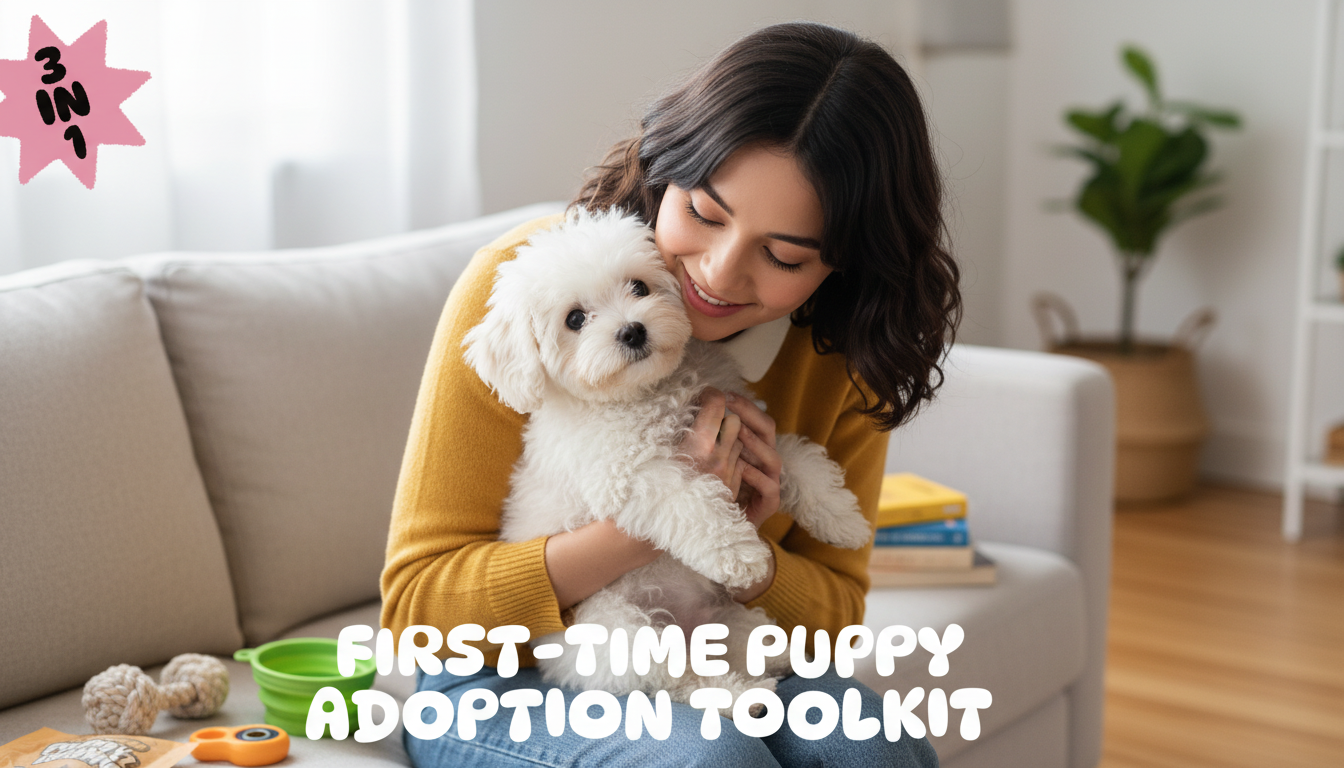
First-Time Puppy Adoption Toolkit: A 3-in-1 Bundle to Prepare New Dog Owners
Bringing home a puppy is exciting and chaotic at the same time—especially when it’s the first dog in the home. A well-structured toolkit helps reduce guesswork by organizing the essentials: what to buy, what to puppy-proof, how to start training, and which early health steps matter most in the first weeks.
What this 3-in-1 puppy adoption bundle is designed to solve
New puppy prep often turns into scattered notes, late-night shopping carts, and conflicting advice. A consolidated bundle is meant to reduce that noise and keep the household moving in one direction.
- Turns scattered to-dos into a single, step-by-step plan for the first days and weeks
- Helps avoid common early mistakes: inconsistent routines, unsafe home setup, and missed vet questions
- Supports smoother transitions with checklists and repeatable daily schedules
- Works best when paired with a veterinarian’s guidance and the puppy’s specific breed/age needs
Before pickup day: home setup and puppy-proofing priorities
The goal before pickup day is simple: reduce risk and reduce overwhelm. Puppies explore with their mouths, get tired fast, and struggle when the environment is too big, too loud, or too unpredictable.
- Create a safe “small zone” (crate or pen + bed area) to limit accidents and overwhelm
- Remove or block hazards: cords, houseplants, medications, small chewable objects, trash access
- Plan quiet decompression time after arrival; limit visitors and overstimulation
- Pick a consistent potty route and outdoor spot before the puppy comes home
- Stock cleaning supplies for accidents and safe chewing alternatives to protect furniture
New Puppy Starter Checklist (what to get and when)
| Category | Must-have items | Why it matters | Timing |
|---|---|---|---|
| Containment & rest | Crate or playpen, washable bed/blanket | Supports sleep, safety, and early housetraining routines | Before pickup day |
| Feeding | Food and water bowls, age-appropriate food, measuring cup | Prevents stomach upset from sudden diet changes; supports consistent portions | Before pickup day |
| Leash & ID | Collar/harness, leash, ID tag | Improves safety on day one and reduces escape risk | Before pickup day |
| Chewing & enrichment | Safe chew toys, puzzle/toy rotation | Reduces biting, boredom, and destructive chewing | Before pickup day |
| Grooming & hygiene | Brush/comb, puppy-safe wipes, nail trimmer (optional) | Builds handling tolerance early; keeps coat and paws manageable | Week 1 |
| Cleanup | Enzymatic cleaner, paper towels, poop bags | Removes odor cues that can lead to repeat accidents | Before pickup day |
| Health admin | Vet appointment plan, vaccination/deworming records folder | Keeps medical history organized for the first vet visit | Week 1 |
Week 1 routine: sleep, potty, feeding, and calm training
Week 1 is less about “perfect training” and more about building a rhythm the puppy can predict. Predictability lowers stress, and lower stress usually means fewer accidents and fewer meltdowns.
- Set a predictable rhythm: wake → potty → food → play/training → rest
- Use short training bursts (1–3 minutes) and reward calm behaviors
- Track potty timing (after waking, after meals, after play) to reduce accidents
- Start alone-time practice gradually to help prevent separation-related stress
- Keep expectations realistic: frequent naps and frequent potty breaks are normal
A practical approach is to choose “house rules” early (where the puppy can go, whether jumping is allowed, how greetings work) and keep everyone consistent. Mixed messages are one of the fastest ways to stall progress.
Training basics that build confidence (without overwhelm)
Early training is really about communication and safety. Focus on a few skills that pay off daily, and rely on management to prevent bad habits from becoming the puppy’s default.
- Prioritize foundational skills: name response, recall foundations, sit, gentle leash habits
- Teach bite inhibition and redirect to appropriate chews instead of scolding
- Socialization means safe exposure—not forced interactions; protect the puppy’s comfort
- Use management (gates, pens, leashes indoors) to prevent rehearsal of bad habits
- Reward the behaviors wanted: quiet, four paws on the floor, settling on a mat
For training and socialization guidance that aligns with modern, humane methods, the American Kennel Club’s training resources are a useful reference: https://www.akc.org/expert-advice/training/.
Health and safety: vet visits, vaccines, and what to monitor
Plan an initial vet exam soon after adoption. It’s the best time to confirm the puppy’s overall health baseline and map out prevention (vaccines, deworming/parasite control) before small issues become expensive problems.
Two solid, veterinarian-backed references for preventive care and household safety are the AVMA pet care pages and ASPCA safety guidance: https://www.avma.org/resources/pet-owners/petcare and https://www.aspca.org/pet-care.
How the First-Time Puppy Adoption Toolkit bundle fits into the plan
To keep everything organized in one place, see the First-Time Puppy Adoption Toolkit – 3-in-1 Bundle for New Dog Owners.
Optional add-ons that can make planning easier in a busy household include a dedicated reminder system for feeding, potty breaks, and training reps. If you like structured prompts and scheduling support, the Personal AI Productivity Companion Toolkit | 10-in-1 AI Virtual Assistant Bundle can help centralize routines and check-ins.
Gifting: when a puppy toolkit makes a practical present
FAQ
What to get for a first time puppy owner?
Cover the essentials: safe containment (crate/pen), bowls and food, collar/harness and leash with ID, enzymatic cleaner, safe chew toys, and a plan for the first vet visit. Add a simple daily schedule and a short training routine to prevent overwhelm.
What do you buy someone with a new puppy?
Practical gifts tend to help most: a preparation toolkit or checklist bundle, chew-safe enrichment toys, poop bags and cleaning supplies, a crate/pen contribution, or a gift card for vet care or training classes.












Leave a comment