Calm Irritated Skin Fast: 10-Minute Relief + 7-Day Reset
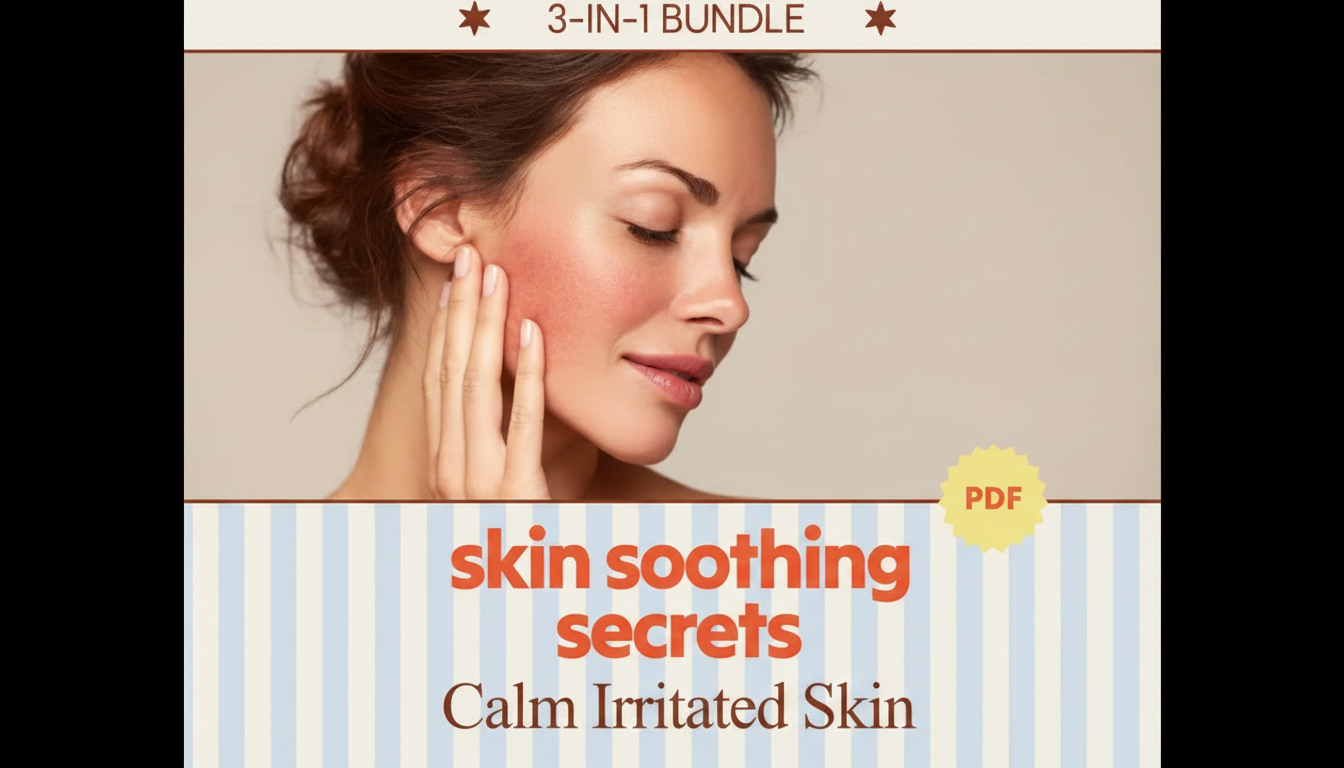
Skin Soothing Secrets Bundle: How to Calm Irritated Skin Fast (3-in-1 Guides)
Irritated skin can flare up quickly—burning, stinging, itching, tightness, or redness—often after over-exfoliation, harsh products, weather shifts, shaving, or an underlying condition. The goal is immediate comfort plus barrier protection, so today’s irritation doesn’t turn into tomorrow’s repeat episode. Below is a practical, fast-acting routine, followed by a simple reset plan and ingredient guidance to help skin feel calm and resilient again.
What “irritated skin” looks and feels like
Irritation can show up in several ways, and it doesn’t always look dramatic at first. Common signs include redness, warmth, stinging, itching, tightness, flaking, bumps, or a burning sensation right after applying products.
It also helps to distinguish irritation from an allergy. Irritation often appears soon after exposure (minutes to hours) and may sting or burn. Allergic reactions can be delayed (hours to days) and may involve swelling, hives, or worsening itch. When the skin barrier is disrupted, water loss increases and everyday products that used to feel fine can suddenly sting.
Take symptoms seriously if you notice rapid swelling, trouble breathing, widespread hives, blistering, oozing, or eye involvement—these require urgent medical attention.
Fast relief routine for the next 10–30 minutes
When skin feels hot, stingy, or itchy, focus on reducing exposure, cooling the skin, and sealing in moisture—without adding new variables.
Step 1: Stop the trigger
Pause any new products and anything “active,” especially exfoliants, retinoids, vitamin C, fragranced items, and any product that stings on contact.
Step 2: Rinse gently
Use lukewarm water only. Avoid hot water, scrubs, cleansing brushes, and prolonged washing. Pat dry with a soft towel—no rubbing.
Step 3: Cool compress (5–10 minutes)
Use a clean cloth soaked in cool water and apply it lightly. Skip direct ice contact, which can be too harsh for already-reactive skin.
Step 4: Moisturize, then protect
Apply a bland, fragrance-free moisturizer that supports the barrier. If the area is very dry or tight, layer a thin film of an occlusive (like petrolatum) on top to reduce water loss.
Step 5: Avoid friction while it calms
Hold off on makeup and shaving until symptoms settle. Friction can keep redness and burning going longer than necessary.
If itching is prominent, consider an over-the-counter anti-itch option as directed by a clinician or pharmacist. Try not to experiment with multiple new remedies at once—too many changes can make it harder to identify what helped or what made things worse.
| Do now | Avoid for 48–72 hours | Why it matters |
|---|---|---|
| Rinse with lukewarm water and pat dry | Hot showers/steam rooms | Heat increases redness and can worsen inflammation |
| Use fragrance-free moisturizer | Fragrance/essential oils | Fragrance is a common irritant and allergen |
| Apply a thin occlusive layer if very dry | Over-cleansing or foaming cleansers | Too much cleansing strips protective lipids |
| Stick to a minimal routine | Retinoids, acids, scrubs | Actives can sting and delay barrier recovery |
| Wear mineral SPF if going outside | Skipping sun protection | UV exposure worsens irritation and slows healing |
Common causes of sudden flare-ups
Many “random” flare-ups have a predictable pattern. Over-exfoliation (acids, scrubs, exfoliating tools) can thin the skin’s comfort margin fast. Retinoid irritation often happens when starting too strong, applying too often, or layering multiple actives.
Contact irritation is another frequent culprit: detergents, hair dye, fragrance, a new sunscreen, or harsh soaps can trigger redness and itch. Environmental stress—cold wind, low humidity, and frequent handwashing—can lead to cracking, burning, and a tight, shiny feel.
Calming ingredients and what to look for
For additional sensitive-skin basics, the American Academy of Dermatology Association (AAD) offers straightforward everyday-care guidance. If eczema is part of the picture, the National Eczema Association has practical treatment and trigger tips. For suspected contact dermatitis, Mayo Clinic’s overview can help clarify patterns and next steps: Mayo Clinic — Contact dermatitis.
A simple 7-day reset plan to rebuild the skin barrier
Days 1–2: Stabilize
Days 3–4: Stay consistent
Days 5–7: Reintroduce slowly
When it’s time to get professional help
Skin Soothing Secrets Bundle: what the 3-in-1 guides are designed to support
For anyone who prefers a clear plan over trial-and-error, the Skin Soothing Secrets Bundle | How to Calm Irritated Skin Fast 3-in-1 Guides is built around step-by-step routines for common irritation scenarios—post-overexfoliation, weather-related dryness, and sensitivity after trying new products. It emphasizes reducing triggers, restoring the barrier, and reintroducing actives gradually, with checklists that simplify decisions when skin reacts unexpectedly.
If you like tracking what you changed (and when), a structured companion can also help keep routines consistent rather than reactive. Some shoppers pair skincare plans with organizational tools like the Personal AI Productivity Companion Toolkit | 10-in-1 AI Virtual Assistant Bundle to log symptoms, product changes, and schedules—especially when troubleshooting recurring flares.
| Item | Details |
|---|---|
| Title | Skin Soothing Secrets Bundle | How to Calm Irritated Skin Fast 3-in-1 Guides |
| Format | 3-in-1 guides |
| Price | 309.99 USD |
| Availability | In stock |
FAQ
How fast can irritated skin calm down?
Mild irritation may feel better within a few hours after stopping triggers, cooling the area, and moisturizing. Full barrier recovery often takes several days; if redness, swelling, blistering, or symptoms keep worsening, get medical advice.
Should actives like retinoids or acids be used when skin is stinging?
No—pause actives during stinging or burning and stick to a minimal routine. Once skin feels normal for several days, reintroduce one active at a time at a lower frequency.
What is the simplest routine to use during a flare?
Cleanse gently only as needed, apply a fragrance-free moisturizer morning and night, and use sun protection. Avoid fragrance, exfoliation, hot water, and frequent product switching until skin settles.











Leave a comment