8-in-1 Foldable Hex Key Set: Fast Fixes Anywhere
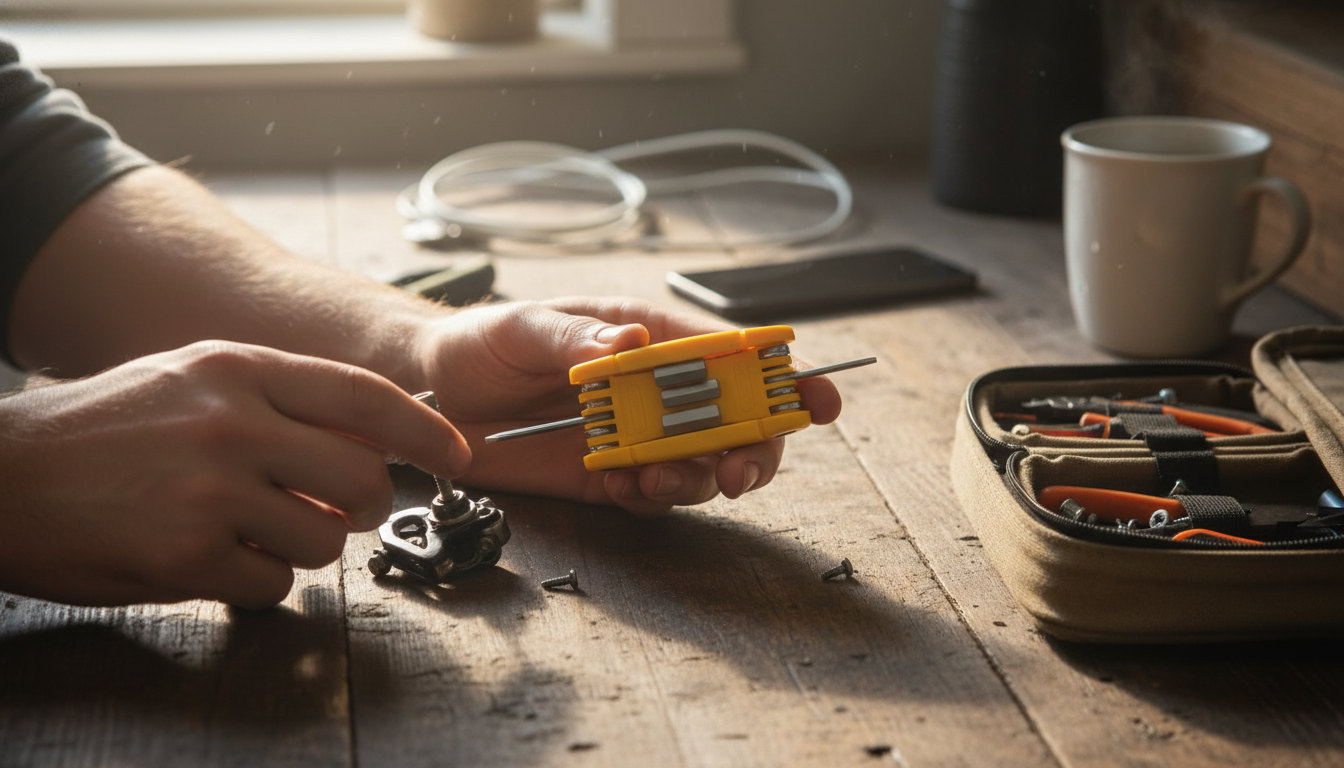
8-in-1 Foldable Hex Key Set for Quick, On-the-Go Adjustments
A foldable hex key set keeps multiple Allen sizes in one compact handle for fast fixes on bikes, furniture, small machines, and household hardware. This 8-in-1 foldable design is built around portability, organized storage, and quicker size changes than a handful of loose L-keys—so small adjustments feel less like a project and more like a quick pit stop. For more guidance, see Milwaukee 48-22-2184 8-Key Folding Hex Key Set – Torx.
What a Foldable Hex Key Set Is
A foldable hex key set is a single handle that stores several hex keys which swing out individually, similar to a pocketknife. Instead of digging through a drawer for the right L-key, you flip out the size you need and keep the rest neatly folded away. For further reading, see Hex key – Wikipedia.
This design reduces tool clutter and makes it easier to carry common sizes for quick adjustments. It’s especially useful for light-to-medium torque tasks where convenience and speed matter more than maximum leverage.
8-in-1 Set Overview
An 8-in-1 foldable set is a compact format that fits naturally in a drawer, glove box, bike bag, or small toolkit. The fold-out keys keep sizes together, which helps prevent “mystery missing” Allen keys that tend to disappear when stored separately.
For frequent small adjustments—tightening, loosening, alignment, and assembly—a foldable set is a practical grab-and-go option. For product details and current pricing, see the 8-in-1 Foldable Hex Key Set.
What’s Included and How to Identify Each Size
Most foldable hex key tools include size markings stamped on the keys, the handle, or both. Before applying torque, confirm you’re using the correct size by checking the marking and then verifying the fit in the fastener.
The best quick test is feel: the correct size seats fully and has minimal side-to-side play. If you’re between sizes, stop and re-check—forcing a near-fit is one of the fastest ways to round out the socket.
Quick size-fit checklist (use this before applying torque)
| Check | What to look for | If it fails |
|---|---|---|
| Seating depth | Key goes fully into the socket | Clean debris from the socket; try the next size |
| Wiggle | Minimal play side-to-side | Stop—incorrect size can strip the fastener |
| Initial turn | Turns smoothly without cam-out | Apply downward pressure; reassess fit |
| Socket condition | Edges look crisp, not rounded | Use a different removal method to avoid further damage |
Common Jobs Where It Helps
A foldable hex key set earns its keep in the everyday situations where a screwdriver won’t cut it:
- Furniture assembly and re-tightening (chairs, desks, bed frames, shelving).
- Bike and scooter adjustments (accessories, seat clamps, and some brake/shift components—confirm size compatibility first).
- Appliance and home hardware with hex socket screws (handles, brackets, fixtures).
- Hobby and workshop use (3D printer frames, jigs, light-duty tool stands).
For broader background on what hex keys are and where they’re used, see this overview of Allen wrenches (hex keys).
How to Use It Without Damaging Screws
Foldable sets are easy to use, but technique matters—especially on small fasteners and softer metals.
- Open only the key you need. Keeping the other keys folded improves grip and reduces wobble in your hand.
- Insert the key fully, then apply steady pressure in line with the screw. Misalignment encourages cam-out and rounding.
- For tight fasteners, avoid sudden jerks. Use controlled force and keep the tool square to the socket.
- If your tool allows multiple reach positions, choose the position that keeps the key as straight as possible in the screw head.
For bike-specific tool handling and workshop best practices, Park Tool’s guidance on hex wrenches is a helpful reference.
Avoiding Stripped Hex Sockets
Stripped sockets usually come down to one of three issues: wrong size, incomplete seating, or too much torque with poor alignment. A few habits greatly reduce the risk:
- Use the exact size. Metric and inch sizes can feel close but still cause damage, especially on smaller fasteners.
- Clean the screw head. Dirt, paint, or threadlocker residue can block full seating.
- Apply downward pressure while turning—particularly with small keys where the tool can climb out.
- If resistance is extreme, try penetrating oil and time rather than more force. Escalating torque often escalates damage.
Foldable vs. Traditional L-Keys
Care, Storage, and Longevity Tips
When It’s Time to Upgrade
Where to Get the 8-in-1 Foldable Hex Key Set
If a compact, all-in-one tool fits your routine, the 8-in-1 Foldable Hex Key Set is available now. Before ordering, confirm whether your most common fasteners are metric or inch so you get the right match for your gear.
For a small “on-the-go” kit, pairing it with a compact power accessory can be handy for travel or car storage—see the 65W GaN USB C Fast Wall Charger with Quick Charge to keep devices topped up while you’re making adjustments away from home.
FAQ
What can I use in place of a hex key?
If you don’t have a hex key, a snug-fitting Torx bit can sometimes work, or use a hex bit in a driver if available. Avoid undersized tools that “almost fit,” because they can quickly round the socket; if the screw head is exposed, locking pliers can be a safer last resort.
How to unscrew a hex key without a hex key?
Clean the socket first, then try a bit that fits very snugly (often a Torx) and apply steady, in-line pressure. If the socket is rounded or stuck, use penetrating oil and time, then consider tapping in a slightly larger bit or using a screw extractor and replacing the fastener afterward.










Leave a comment