65W GaN USB-C Wall Charger: Quick Charge + USB PD
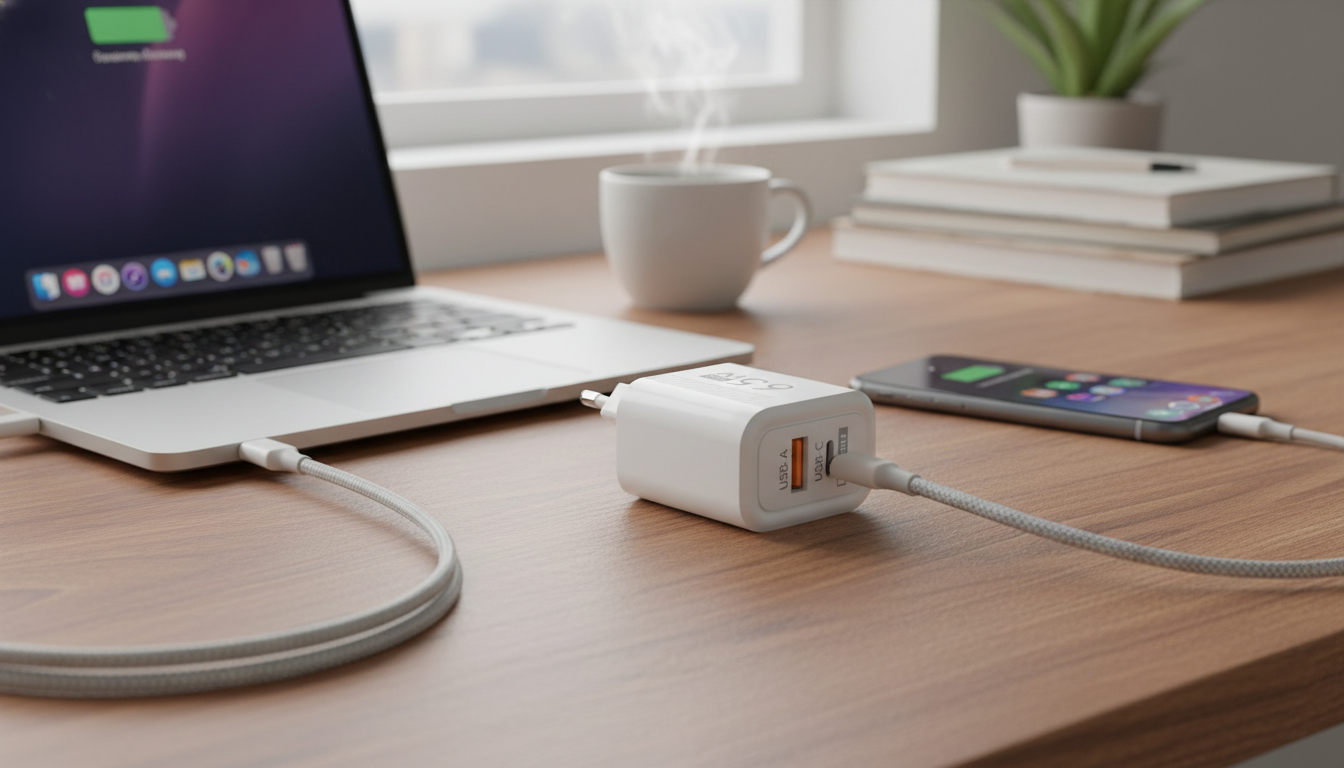
65W GaN USB‑C Fast Wall Charger with Quick Charge
A compact, high-output wall charger can replace multiple bulky adapters and keep phones, tablets, and many USB‑C laptops topped up faster. This 65W GaN model pairs modern gallium nitride efficiency with Quick Charge support to deliver strong performance in a travel-friendly size—ideal for daily carry, desk setups, and grab-and-go charging.
What this charger is built to do
A 65W wall charger is designed to cover a wide range of modern devices without forcing you to pack (or plug in) a separate brick for each one. The goal is simple: dependable, higher-wattage USB‑C charging from a single outlet.
- Deliver up to 65W of power from a wall outlet for fast charging on compatible devices.
- Use GaN (gallium nitride) components to reduce heat and size compared with many traditional silicon chargers.
- Support fast-charging protocols commonly found on modern phones and accessories, including Quick Charge where supported.
- Serve as an everyday and travel charger for USB‑C devices, minimizing the need for multiple bricks.
If you want one charger that can handle a phone in the morning and a USB‑C laptop at your desk later, this class of charger is built for that kind of routine.
Why GaN matters for everyday charging
GaN (gallium nitride) is a semiconductor technology commonly used in newer compact chargers. The practical benefit is that it helps deliver higher power in smaller enclosures while keeping heat under better control.
- Higher efficiency can mean less wasted energy as heat during charging sessions.
- Smaller internal components can allow a more compact body without sacrificing output capability.
- Heat management is especially important at higher wattages (45W–65W) to help sustain stable charging.
- A GaN design can be a practical upgrade when replacing older 5W–20W chargers.
For a deeper technical overview of GaN in power electronics, see this reference from NIST. For charging standards and how devices negotiate power, the USB Power Delivery documentation is a helpful starting point.
Fast-charging compatibility in plain terms
“Fast charging” isn’t one universal feature—it’s a handshake between the charger and your device. Your phone, tablet, or laptop decides how much power it can accept, and the charger provides it within the supported standard.
- USB‑C Power Delivery (USB PD) is the most common fast-charging method for many USB‑C phones, tablets, power banks, and laptops.
- Quick Charge is widely used across many Android ecosystems; compatible devices negotiate higher power levels for faster charging.
- Actual speed depends on device support, cable quality, battery temperature, and the device’s charging limits.
- For best results, pair with a rated USB‑C cable that supports the needed wattage and data/charging standard.
Quick Charge details are available from Qualcomm’s Quick Charge technology page. In day-to-day use, the most important step is simply confirming what your device supports (USB PD, Quick Charge, or both) and using a cable rated for the power you expect to draw.
Compatibility checklist (quick guide)
| Device type | What to look for | What to expect from a 65W charger |
|---|---|---|
| USB‑C phones | USB PD and/or Quick Charge support | Fast charging up to the phone’s limit; may taper near full |
| Tablets | USB PD support preferred | Typically faster than standard 5V charging; good for high-capacity batteries |
| USB‑C laptops (light/medium) | USB PD input; check required wattage | Can charge many models that accept 45W–65W via USB‑C |
| Accessories (earbuds, watches, power banks) | Standard USB charging; some use PD/QC | Works fine; speed varies by accessory controller |
Using a 65W wall charger safely and effectively
Higher power is convenient, but a few simple habits can improve reliability and help your devices charge more consistently.
- Use a cable rated for the expected load (especially for 45W–65W charging) to reduce heat and voltage drop.
- Avoid covering the charger or using it in tightly enclosed spaces while charging high-power devices.
- If a device gets unusually warm, allow airflow and consider removing thick cases during rapid charging.
- Unplug by gripping the charger body rather than yanking the cable to reduce wear on the connector.
Also keep in mind that many devices slow charging as the battery nears 100% to protect battery health. That “tapering” behavior is normal and expected during fast charging.
When 65W is the right choice
Not everyone needs 65W, but it’s a strong all-around wattage for mixed-device households and work bags. It’s especially useful when you want one charger that can flex between small and medium devices without feeling underpowered.
- A single charger for phone + tablet + USB‑C laptop workflows, reducing bag clutter.
- Faster top-ups during short breaks (commutes, airport layovers, coffee stops).
- A practical replacement for multiple low-watt chargers around the home or office.
- A solid baseline for newer devices that increasingly ship without a charging brick.
Product details and buying considerations
65W GaN USB C Fast Wall Charger with Quick Charge is built for high-output USB‑C charging in a compact format. Price and availability can change, so confirm current details on the product page before checkout.
More in-stock picks
- Personal AI Productivity Companion Toolkit | 10-in-1 AI Virtual Assistant Bundle (in stock)
- Elegant Hydrangea Ceramic Soap & Lotion Dispenser – Round Electroplated Design (in stock)
FAQ
What is the difference between a GaN charger and a quick charger?
GaN refers to the charger’s internal semiconductor technology, which often enables a smaller design and better efficiency at higher wattages. “Quick charging” refers to fast-charging protocols (such as USB PD or Quick Charge) that let a compatible device negotiate higher power for faster charging.
Does the GaN fast charger work?
Yes—GaN chargers function like standard wall chargers, but they can deliver higher power in a more compact form and may run cooler under load. Real-world performance depends on whether your device supports USB PD and/or Quick Charge, plus using a properly rated cable.












Leave a comment