Gucci Style Eras: From Florentine Roots to Maximalism
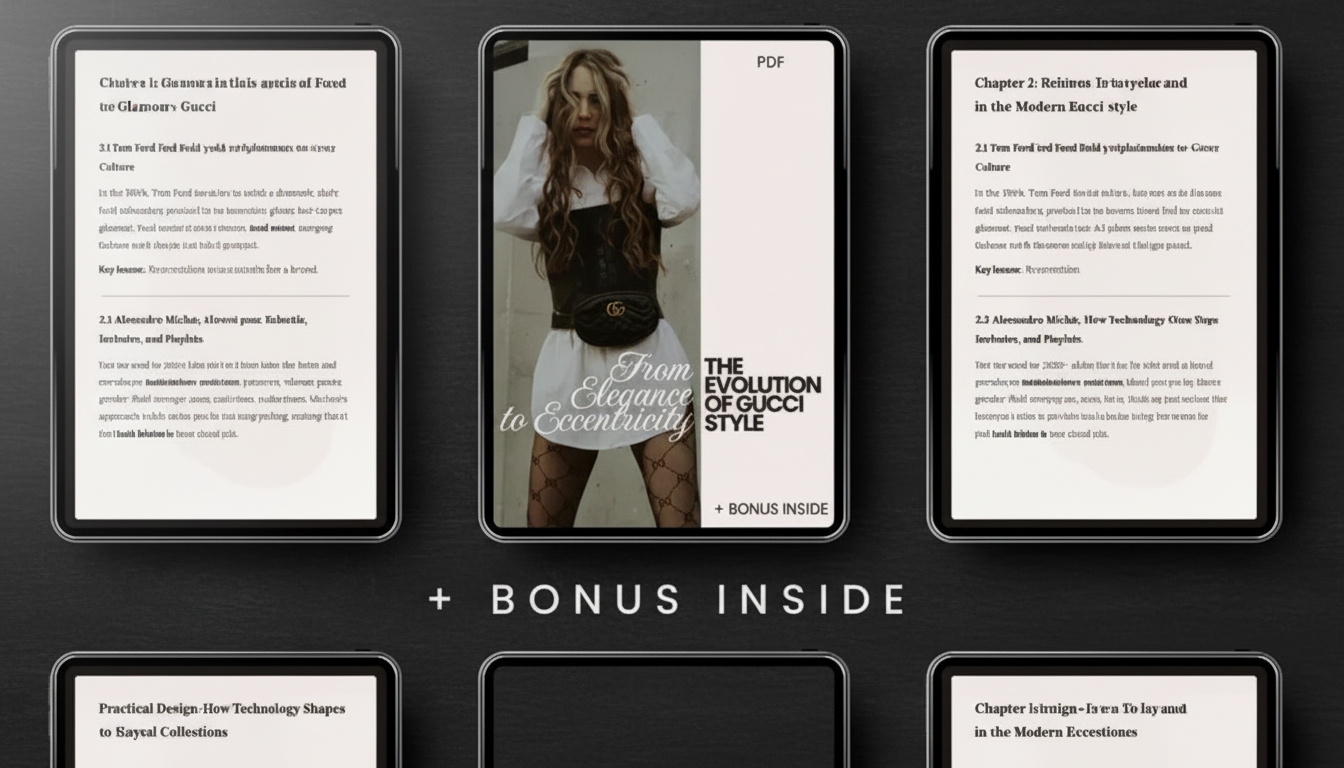
What are the key eras in Gucci style from its early elegance to modern maximalism?
Gucci’s style story moves through distinct eras—each with its own signatures—while still circling back to the house’s core codes: craftsmanship, hardware, equestrian roots, and a willingness to evolve. From refined beginnings to bold, eclectic runways, these are the key chapters that define Gucci’s look today.
1920s–1940s: Florentine craftsmanship and quiet luxury
Founded in Florence, early Gucci leaned into impeccable leatherwork and travel-ready sophistication. The mood was polished and practical: structured handbags, luggage, and riding-inspired details that felt aspirational without being loud.
1950s–1960s: Jet-set glamour and iconic codes
Postwar prosperity pushed Gucci into the spotlight with celebrity clientele and instantly recognizable motifs. This is the era associated with the horsebit hardware, the green-red-green web stripe, and bamboo handles—elements that still anchor many modern designs.
1970s: Logo confidence and lounge-era attitude
As fashion became more expressive, Gucci embraced bolder branding and a more relaxed, sensual wardrobe. Monograms, statement accessories, and a mix of tailored and easy silhouettes signaled a shift from discreet elegance to confident visibility.
1990s: Sleek minimalism and high-gloss sex appeal
The 1990s brought a streamlined, provocative polish: clean lines, sharp tailoring, and glossy finishes. The look was pared back but undeniably glamorous—often built around a few strong pieces rather than layered ornament.
2010s–today: Modern maximalism and eclectic remixing
Recent Gucci leans into color, pattern, and personality: vintage references, romantic details, quirky combinations, and gender-fluid styling. Maximalism here is intentional—mixing eras, prints, and accessories to create a collectible, story-driven outfit.
For a deeper breakdown of Gucci’s codes, standout pieces, and how to wear each era, visit the full guide: https://enticingwaresbay.shop/guide-gucci-style-evolution-codes-eras-how-to-wear-them/.
FAQ
What are Gucci’s most recognizable style codes?
The most recognizable codes include the horsebit, bamboo handle, green-red-green web stripe, GG monogram, and equestrian-inspired details. These motifs reappear across decades, reinterpreted in new materials and proportions.











Leave a comment