No-Drama Chore System: Fun, Fair Cleaning for Kids
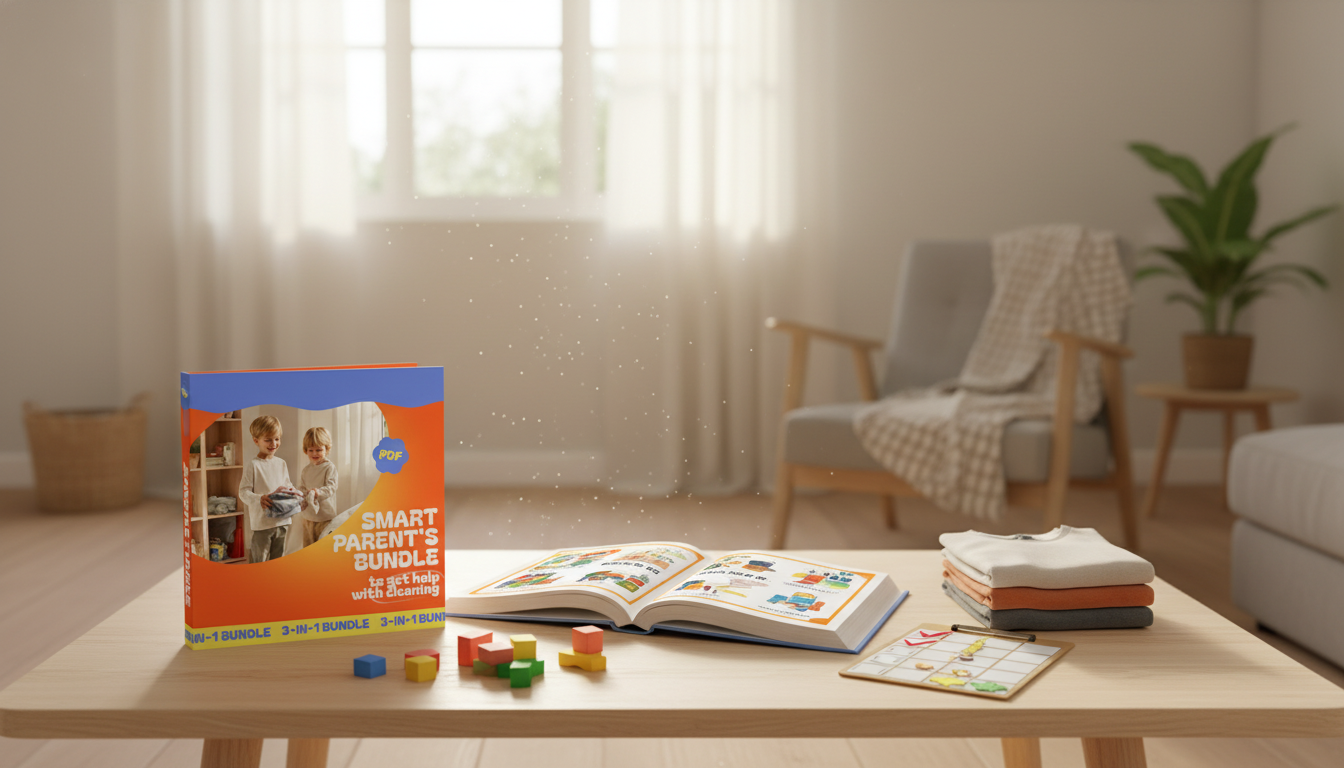
Smart Parent’s Bundle to Get Help with Cleaning: Make Household Chores Fun, Fair, and Easy
Getting kids to help at home works best when chores feel doable, predictable, and even a little playful. This 3-in-1 Smart Parent’s Bundle is designed to turn everyday cleaning into simple routines with clear expectations, age-appropriate tasks, and motivation that doesn’t rely on constant reminders.
What This 3-in-1 Bundle Helps Parents Solve
Most chore drama isn’t about laziness—it’s about vague expectations, inconsistent follow-through, and tasks that feel endless. A clear system can make “helping” feel like a normal part of family life.
- Reduces daily “nagging loops” by replacing verbal reminders with visible routines and agreements
- Builds confidence by assigning tasks kids can actually finish without taking over
- Turns resistance into cooperation using games, short sprints, and simple reward systems
- Creates consistency across caregivers with shared rules and checklists
- Supports long-term habits: ownership, teamwork, and basic life skills
For parenting strategies that support calmer, more consistent routines, the CDC’s Positive Parenting Tips offers practical, research-informed guidance.
How to Set Up a No-Drama Chore System in One Weekend
A smooth chore routine doesn’t require a full household overhaul. One focused weekend setup can create structure that’s easy to maintain Monday through Friday.
- Start with a family reset talk: define what “clean enough” means for each room (2–3 standards only)
- Pick 5–10 core chores that repeat weekly; avoid adding everything at once
- Create chore “zones” (kitchen, living room, bedrooms, bathroom) and assign responsibility by zone, not by random tasks
- Use time-boxing: 10–15 minute tidy sprints beat long cleanup marathons
- Add a simple close-out routine: quick check, praise what’s done, one fix, then done
When kids know what “done” looks like and the task ends at a predictable time, it’s much easier to start.
Age-Appropriate Chores That Actually Work
The fastest way to create pushback is to hand a child a job that’s too big or too vague. Instead, match chores to skill level and aim for quick wins that build momentum.
- Ages 2–4: put toys in a bin, wipe a low surface with a damp cloth, put clothes in a hamper
- Ages 5–7: set the table, match socks, water plants, help sort recycling
- Ages 8–10: load/unload dishwasher, sweep small areas, wipe counters, make bed fully
- Ages 11–13: vacuum, simple bathroom reset, help with laundry start-to-finish (with guidance)
- Teens: meal prep support, deeper cleaning rotations, shared responsibility for common spaces
Quick Chore Match Guide (Time, Tools, and Parent Check-In)
| Age range | Best starter chores | Typical time | Tools needed | Parent role |
|---|---|---|---|---|
| 2–4 | Toys away, wipe spills, carry items to trash | 3–8 min | Bin, small cloth | Do it together, model steps |
| 5–7 | Set table, sort laundry, tidy books | 5–12 min | Placements, hamper | Give 1 instruction at a time |
| 8–10 | Dishes, sweep, counters, bed | 10–20 min | Broom, spray, sponge | Check quality once, then coach |
| 11–13 | Vacuum, bathroom reset, laundry cycle | 15–30 min | Vacuum, gloves | Agree on “done” standards |
| 14+ | Rotations, meal support, shared zones | 20–45 min | Room-specific kit | Hold to standard, reduce micromanaging |
Make Chores Fun Without Bribing: Games and Micro-Challenges
Motivation works better when it’s built into the routine, not negotiated every time. Small challenges turn cleaning into something kids can “win” quickly.
- Beat-the-timer sprints: 10 minutes, music on, stop when the timer ends
- Before-and-after photo challenge: kids compare progress and learn “what changed”
- Chore bingo: small tasks in squares; complete a row for a privilege (screen time bank, choose dessert, pick a family activity)
- “Help the future you” routine: quick nightly reset so mornings are easier
- Team rotations: pair a younger child with an older “coach” for one zone per week
Positive reinforcement is most effective when it’s immediate and specific (praising the behavior you want repeated). The APA’s definition of positive reinforcement is a helpful reference when building a reward-and-privilege system that doesn’t spiral into constant bargaining.
Fairness Rules That Prevent Fights
What’s Inside the Smart Parent’s Bundle
If the goal is less arguing and more independence, structure matters. Smart Parent’s Bundle to Get Help with Cleaning: 3-in-1 Guide for Fun and Easy Household Chores focuses on repeatable routines that kids can understand and parents can maintain.
To support planning beyond chores (school routines, homework blocks, shared calendars), some families also pair a cleaning system with a separate organization toolkit like the Personal AI Productivity Companion Toolkit | 10-in-1 AI Virtual Assistant Bundle.
A Simple Weekly Routine (Example You Can Copy)
For cleaning best practices and practical guidance on safe products and processes, the American Cleaning Institute is a solid resource to keep handy.
Common Roadblocks and Quick Fixes
Who This Bundle Fits Best
FAQ
What age should kids start helping with household chores?
Toddlers can start as soon as they can follow simple, safe directions—think micro-tasks like putting toys in a bin or dropping clothes in a hamper. The key is matching the job to their ability and doing it consistently so “helping” becomes normal.
How do chores become a habit instead of a daily argument?
Use short, predictable routines (like 10-minute tidy sprints), post visible checklists, and define a simple “done” standard for each zone. Offering small choices—such as which task to do first—can reduce power struggles while keeping expectations steady.
Should kids be paid for chores?
Many families separate “family contribution” chores (expected because everyone lives there) from optional paid tasks (extra jobs beyond the basics). Privileges tied to consistency—rather than perfection—often build responsibility without turning every chore into a negotiation.








Leave a comment