Hiking-Travel Backpack: Laptop Sleeve + Shoe Compartment
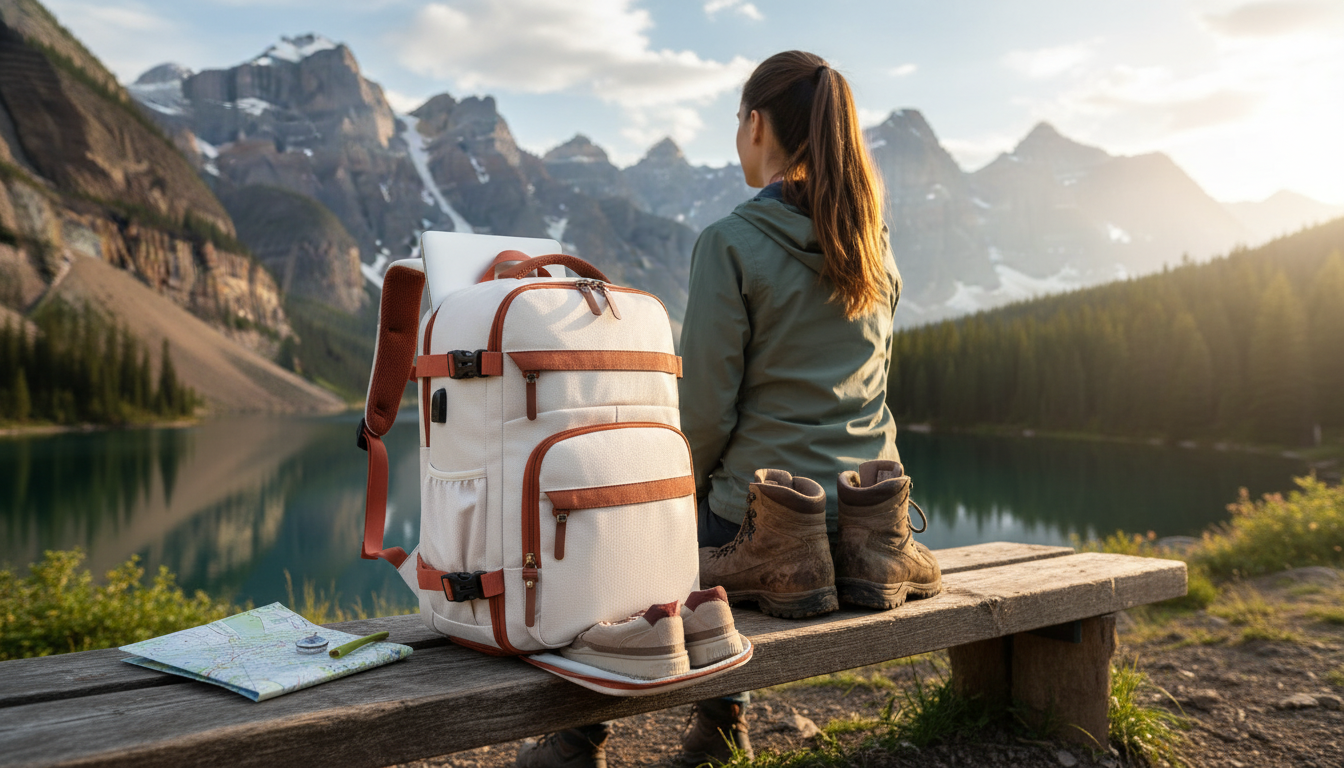
A pack that transitions from trail days to travel days needs smart organization, comfort under load, and protection for tech. The right hiking-travel hybrid keeps your gear separated, balanced, and easy to access—whether you’re moving through an airport terminal, commuting across town, or heading out for a weekend hike. Below are the features that matter most, why a dedicated laptop sleeve and shoe compartment change the way you pack, and how to choose a capacity that works for both day hikes and carry-on travel.
What Makes a Backpack Work for Both Hiking and Travel
The best “do-it-all” backpacks share one trait: they feel stable and organized when you’re moving. Hiking comfort and travel efficiency can coexist when the design supports your body and your routine.
- Carry comfort first: Supportive shoulder straps, a breathable back panel, and a stable shape help the load stay close to you so it doesn’t sway on stairs or uneven ground.
- Organization that reduces “bag dump”: Separate zones for clothing, tech, and small essentials help you move quickly through stations, airports, and trailheads.
- Durability for mixed environments: Abrasion-resistant fabric, reinforced stitching, and dependable zippers matter when the bag is packed tight or scraped against rock, concrete, and overhead-bin edges.
- Practical access: A wide-opening main compartment or panel access is often more travel-friendly than a narrow top-loader, especially for 1–3 night trips.
Laptop Storage That Actually Protects Your Gear
“Laptop pocket” can mean anything from a thin slip panel to a structured, padded sleeve. For a backpack that’s going to see both trails and terminals, protection and balance are the priorities.
- A dedicated laptop sleeve helps with impact and pressure: It keeps your device upright and reduces contact with hard items like chargers or water bottles.
- Padding and structure matter: A sleeve should hold the laptop snugly so it doesn’t slide or slump to the bottom where it’s more likely to take a hit.
- Placement affects stability: Laptop storage positioned close to the back panel typically feels more secure while walking, because weight stays centered.
- Quick access is a real travel advantage: It speeds up security checks and makes it easier to work from a café without unpacking clothing. For screening rules and reminders, the TSA’s guidance is a helpful reference: TSA: What Can I Bring?.
Why a Shoe Compartment Improves Packing (Even for Non-Gym Trips)
A separate shoe compartment isn’t just for gym bags. It’s one of the simplest ways to keep the rest of your gear cleaner, especially when your itinerary includes outdoor time.
Capacity and Fit: Choosing the Right Size for Day Hikes and Trips
- Capacity follows your kit: Insulation layers, rain gear, and tech add volume quickly even for short trips.
- Bigger can still hike well: A larger pack can feel stable on trail if it compresses down and doesn’t barrel outward away from your back.
- Carry-on realities vary: Many travel-friendly hiking packs fit overhead bins, but airline dimensions differ—check before you fly.
- Fit checkpoints: Straps should distribute weight comfortably, and the back panel should sit flat without bulging or pulling you backward. For fit and torso-sizing fundamentals, see REI Expert Advice: Backpack Fit & Torso Sizing.
| Use case | Typical capacity range | What usually fits |
|---|---|---|
| Day hike + laptop | 20–30L | Light layers, water, snacks, small tech kit |
| Overnight or weekend + shoes | 30–40L | Clothes for 2–3 days, spare footwear, toiletry kit |
| Long weekend with bulky layers | 40–50L | Extra insulation, rain gear, more structured packing cubes |
| Extended travel (minimalist) | 35–45L | Multi-outfit rotation, compact laundry setup, small electronics |
Key Features to Check Before Buying
Packing System: A Simple Setup for Clean, Fast Access
- Main compartment: Stack clothing in packing cubes; keep heavier items closer to the back panel for better balance.
- Laptop zone: Place your laptop (and a slim notebook or tablet) in the sleeve; add a thin protective case if you commute daily.
- Shoe compartment: Store shoes in a lightweight bag; add a small odor absorber on multi-day trips.
- Front/quick pockets: Keep passport/ID, earbuds, tissues, and a small power bank where they can be reached while standing.
- Trail crossover: Stash a compact first-aid kit, headlamp, and a light rain shell even on travel-heavy itineraries. When you’re outdoors, follow the basics of low-impact travel—Leave No Trace’s 7 Principles are a solid refresher.
Product Spotlight: Large Hiking Travel Backpack with Laptop & Shoe Compartment
If you want one bag that can handle weekday commuting and weekend trails, the Large Hiking Travel Backpack with Laptop & Shoe Compartment is built around the two areas most travelers struggle with: protected tech storage and a dedicated place for footwear or “dirty items.” Used with packing cubes, the main compartment stays tidy while the shoe pocket acts as a consistent containment zone for muddy shoes or damp gear.
For travel days and remote-work stops, pairing your setup with a compact charger keeps devices topped up without digging through your bag. The 65W GaN USB C Fast Wall Charger with Quick Charge is an easy add-on for charging a phone, laptop, and accessories during layovers or café sessions.
| Item | Detail |
|---|---|
| Product | Large Hiking Travel Backpack with Laptop & Shoe Compartment |
| Price | 64.82 USD |
| Availability | In stock |
FAQ
Are hiking backpacks good for travel?
They can be, especially if you value carry comfort, durability, and compression that keeps weight stable. Look for travel-friendly access (panel opening helps), carry-on-friendly dimensions, and a structured, padded laptop area so tech and documents don’t get crushed.
Is a 40L backpack too big for hiking?
Not necessarily—40L can work well for longer day hikes, cold-weather layers, or overnights if the pack compresses and carries close to your back. The best indicator is how stable it feels when fully loaded, not the number alone.








Leave a comment